

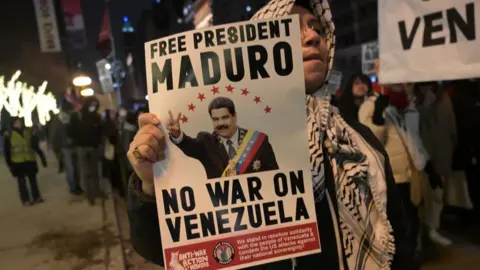
On Monday morning, a handcuffed, jumpsuit-clad Nicolás Maduro disembarked from a military helicopter in New York City, flanked by armed federal agents.
The Caracas chief had spent the night in a well-known federal detention center in Brooklyn, prior to authorities moved him to a Manhattan federal building to answer to indictments.
The Attorney General has asserted Maduro was delivered to the US to "face justice".
But international law experts question the lawfulness of the administration's operation, and argue the US may have breached international statutes concerning the military intervention. Domestically, however, the US's actions occupy a legal grey area that may nevertheless result in Maduro standing trial, regardless of the circumstances that led to his presence.
The US asserts its actions were legally justified. The executive branch has accused Maduro of "narco-trafficking terrorism" and abetting the transport of "thousands of tonnes" of narcotics to the US.
"The entire team acted by the book, with resolve, and in full compliance with US law and established protocols," the top legal official said in a official communication.
Maduro has consistently rejected US allegations that he oversees an criminal narcotics enterprise, and in court in New York on Monday he pled of innocent.
Global Legal and Action Concerns
While the indictments are related to drugs, the US prosecution of Maduro is the culmination of years of condemnation of his governance of Venezuela from the wider international community.
In 2020, UN inquiry officials said Maduro's government had committed "grave abuses" that were crimes against humanity - and that the president and other top officials were involved. The US and some of its partners have also alleged Maduro of manipulating votes, and did not recognise him as the legitimate president.
Maduro's alleged links to criminal syndicates are the focus of this indictment, yet the US methods in putting him before a US judge to answer these charges are also under scrutiny.
Conducting a military operation in Venezuela and spiriting Maduro out of the country in a clandestine nighttime raid was "a clear violation under the UN Charter," said a expert at a law school.
Legal authorities cited a number of issues stemming from the US mission.
The United Nations Charter bans members from threatening or using force against other nations. It allows for "self-defence if an armed attack occurs" but that danger must be imminent, professors said. The other exception occurs when the UN Security Council sanctions such an intervention, which the US lacked before it proceeded in Venezuela.
Treaty law would consider the illicit narcotics allegations the US claims against Maduro to be a criminal justice issue, experts say, not a armed aggression that might justify one country to take military action against another.
In official remarks, the government has described the operation as, in the words of the top diplomat, "essentially a criminal apprehension", rather than an act of war.
Precedent and Domestic Legal Debate
Maduro has been formally charged on illicit narcotics allegations in the US since 2020; the Department of Justice has now issued a updated - or amended - charging document against the Venezuelan leader. The executive branch argues it is now enforcing it.
"The action was executed to facilitate an ongoing criminal prosecution tied to large-scale narcotics trafficking and connected charges that have spurred conflict, upended the area, and contributed directly to the narcotics problem killing US citizens," the Attorney General said in her statement.
But since the apprehension, several jurists have said the US disregarded treaty obligations by extracting Maduro out of Venezuela unilaterally.
"One nation cannot go into another sovereign nation and apprehend citizens," said an authority in international criminal law. "If the US wants to detain someone in another country, the established method to do that is extradition."
Regardless of whether an defendant is accused in America, "The US has no right to travel globally executing an arrest warrant in the territory of other sovereign states," she said.
Maduro's lawyers in the Manhattan courtroom on Monday said they would dispute the legality of the US action which took him from Caracas to New York.
There's also a long-running scholarly argument about whether presidents must follow the UN Charter. The US Constitution regards treaties the country ratifies to be the "binding legal authority".
But there's a well-known case of a previous government arguing it did not have to comply with the charter.
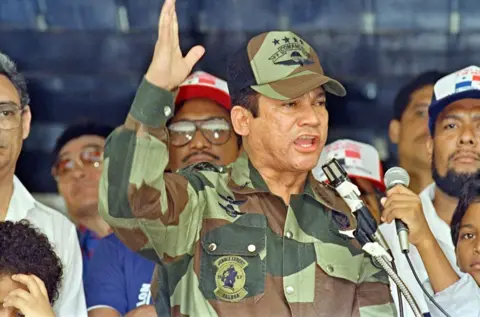
In 1989, the US government ousted Panama's strongman Manuel Noriega and brought him to the US to answer drug trafficking charges.
An confidential DOJ document from the time stated that the president had the legal authority to order the FBI to apprehend individuals who violated US law, "even if those actions violate traditional state practice" - including the UN Charter.
The writer of that document, William Barr, became the US top prosecutor and filed the initial 2020 indictment against Maduro.
However, the document's rationale later came under scrutiny from legal scholars. US the judiciary have not made a definitive judgment on the question.
US War Powers and Jurisdiction
In the US, the issue of whether this action broke any federal regulations is multifaceted.
The US Constitution vests Congress the prerogative to declare war, but places the president in charge of the armed forces.
A War Powers Resolution called the War Powers Resolution establishes restrictions on the president's power to use the military. It mandates the president to consult Congress before committing US troops abroad "in every possible instance," and report to Congress within 48 hours of committing troops.
The administration did not give Congress a heads up before the mission in Venezuela "to ensure its success," a top official said.
However, several {presidents|commanders


